sk anyone planning a trip to the Sacred Valley what they know about Pisac, and the market usually comes up first. It’s one of the most photographed markets in Peru, and for good reason — but there’s a difference between wandering through it as a tourist and actually knowing how to make the most of a visit. Here’s what to know before you go.
When to Go
Pisac Market runs daily, but not every day looks the same. Tuesdays, Thursdays, and especially Sundays bring the biggest crowds, more stalls, and the fullest version of the market — Sunday in particular draws vendors from surrounding communities who don’t set up on quieter days. If you want the classic, bustling Pisac market experience, plan around one of those three days.
If you’d rather browse without the crowds, the market is still open (in a smaller, quieter form) on the other days of the week — a good option if you’re staying in Pisac for a while and just want to pick up produce or a specific item without the tourist rush.
Mornings are the best time to arrive regardless of the day. Stalls are freshest, selection is best, and by early afternoon some vendors start packing up.
What You’ll Find
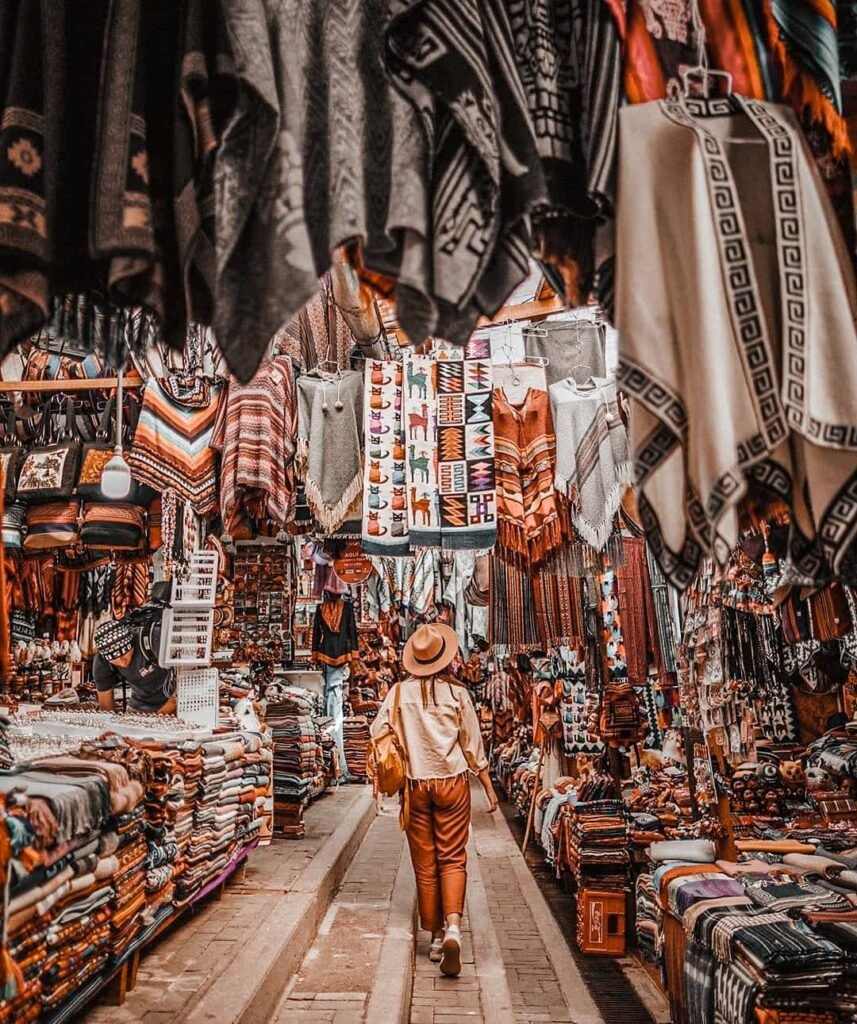
The market splits roughly into two worlds. Closer to the plaza, you’ll find the section most visitors come for: textiles, alpaca wool clothing, ceramics, jewelry, and woodwork, much of it made by artisans from Pisac and nearby villages. Quality and craftsmanship vary a lot from stall to stall, so it’s worth taking your time rather than buying at the first table you see.
A few streets over is the food and produce market, which is where the town actually shops day to day. This is where you’ll see mountains of potatoes (Peru grows thousands of varieties, and Pisac’s market carries far more than you’d expect), fresh cheese, herbs, and prepared food cooked right at the stalls. It’s less polished than the textile section and far more interesting if you want a real sense of daily life in Pisac.
A Few Tips on Bargaining
Light bargaining is normal and expected in the craft section, especially if you’re buying more than one item. That said, keep it friendly — a small back-and-forth is part of the experience, but pushing too hard over a dollar or two isn’t well received, especially with vendors who rely on this market for their income. In the food section, prices are generally fixed and bargaining isn’t really part of the culture.
Beyond the Stalls
The market isn’t just shopping. On Sundays especially, you’ll often catch small cultural performances near the plaza — traditional dance or music tied to the town’s festivities. It’s worth building in extra time to just sit somewhere with a view of the plaza and watch the market move, rather than treating it purely as a shopping stop.
If you want to turn a market visit into a full day rather than a quick stop, pair it with some of Pisac’s best local spots nearby, or check what else is happening in Pisac today market days often overlap with other events in town.
Practical Notes
- Bring small bills. Many vendors, especially in the food section, don’t have change for larger notes.
- Bags fill up fast. If you’re buying textiles or ceramics, bring a bag or be ready to carry a few extra parcels back to where you’re staying.
- It’s busiest mid-morning to early afternoon. If you want photos without crowds in every frame, early morning is your best window.
- Not everything is authentically local. As with most markets that see heavy tourism, some goods are mass-produced elsewhere. If handmade, local craftsmanship matters to you, don’t be afraid to ask a vendor directly where and how something was made — most are happy to talk about their work.
Worth More Than a Quick Stop
It’s easy to treat the Pisac Market as a 30-minute photo opportunity on the way to the ruins above town. But given real time, it’s one of the better windows into how the town actually works — where people shop, what they grow, and what they make. Come with a bit of extra time, and the market gives back a lot more than a few souvenirs.